
What Happens When You Make Mexico With Your Own Hands
There’s a moment halfway through Chef Luis Arce Mota’s Mexican Culinary Techniques class when something shifts. You came in expecting a cooking class, a recipe, maybe a demo, something to check off your list. But your hands are in fresh masa, you’re hearing about the techniques passed down over centuries, and you start to realize: this is something else entirely.
That feeling is very much by design.
Luis Arce Mota is the chef and owner of La Contenta Oeste, one of New York City’s most celebrated destinations for authentic Mexican cuisine. His path here is the kind of story you don’t forget: raised in Mazatlán by a fisherman father, cooking in the mountains of the Sierra Madre during his Mexican Army service, arriving in the U.S. and starting as a dishwasher at Carmine’s in Times Square, working his way through some of the most respected kitchens in the city, Bouley, Union Square Café, Windows on the World, training at Le Cordon Bleu in Paris, and the Culinary Institute of America in Hyde Park, NY. He has been formally recognized by both the Mexican Senate and the Mexican Secretary of Tourism for his contributions to promoting Mexican gastronomy on the world stage.
And yet, for all of that, what he most wants to share with guests who walk through his door, or into his classroom, is something much simpler and deeper: Mexico as he lived it.
We sat down with Luis ahead of his upcoming classes on Leisurely to talk about what guests can expect, why hands-on learning hits differently, and why Mexican wine has been shocking people in the best possible way.
What Brought Him Back to Mexico
Your training took you through some of the most prestigious kitchens in New York and Paris. What ultimately pulled you back toward traditional Mexican cuisine, and how does that background shape the way you teach?
The French training gave me discipline and precision. But what truly defines my cooking isn’t the school in France or the restaurants in New York. It is growing up in Mexico. The local markets, Sundays with friends on the beach, cooking in the mountains while in the Mexican Army. That’s not something you learn in a professional kitchen. That’s something you live.
When I teach, I don’t want my guests to memorize recipes. I want them to understand the moment. It’s the confidence of knowing that a simple taco with a good salsa beats a complicated plate with no soul.
Honoring a Culinary Tradition
You’ve been recognized by the Mexican Senate and the Mexican Secretary of Tourism for promoting Mexican gastronomy. What does that kind of recognition mean for what you feel responsible for passing on?
These recognitions are truly an honor, and a responsibility. It reminds me that I’m not just cooking for myself or my customers anymore. I’m representing the families, the vendors, the communities behind every ingredient and technique. In my classes, that means I can’t simplify traditions just because we’re in New York City. I have to tell the real story: the indigenous roots, the regional differences, the history.
That recognition pushes me to be accurate, and to make sure my students leave understanding that Mexican food is one of the great cuisines of the world, not comfort food, but dishes with a deep, complex culinary tradition worthy of respect.
I’m also proud to have cooked for Andrés Manuel López Obrador, the former president of Mexico. That remains one of the highlights of my culinary career.
Learning Through the Hands
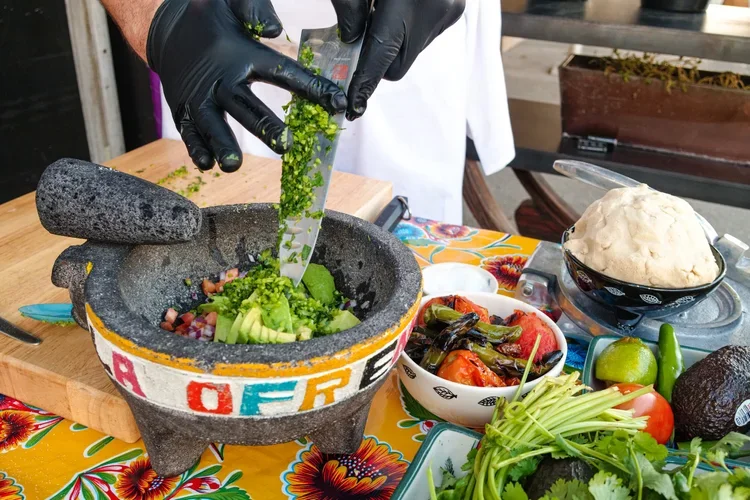
In the class, you teach pre- and post-Hispanic techniques like metateado, molcajeteado, and amasado. For someone encountering these for the first time, why do these techniques matter beyond the recipes themselves?
These techniques are the difference between knowing a dish and feeling it. When you grind on the metate, you’re not just breaking down ingredients, you’re releasing oils and essences no blender can replicate. When you work the masa with your hands, you’re feeling its texture, understanding when it’s right. That connection doesn’t happen with a machine.
These techniques carry generations of knowledge. Indigenous women developed these methods over hundreds of years without modern tools. By practicing them, you’re not just learning to cook, you’re connecting to them, to their hands. The recipe tells you what; these techniques teach you why. And that respect stays with you forever.
Why Corn Is Everything
Corn plays such a central role in the experience. Why is it so foundational, and what tends to click for guests when they first work with fresh masa?
Corn is everything. It’s not just food, it’s identity. In Mexican cosmology, we were made from corn. It’s our origin story, our sustenance, our connection to the earth and to each other. Without corn, there is no Mexico.
When students work with fresh masa for the first time, something shifts. They feel the texture change under their hands. They smell that sweet, earthy aroma. They realize that a real tortilla has nothing in common with the yellow discs in supermarkets. They leave knowing that corn isn’t an ingredient, it’s a teacher. And making masa connects you to something much bigger than dinner.
A Surprise for Many Guests: Mexican Wine
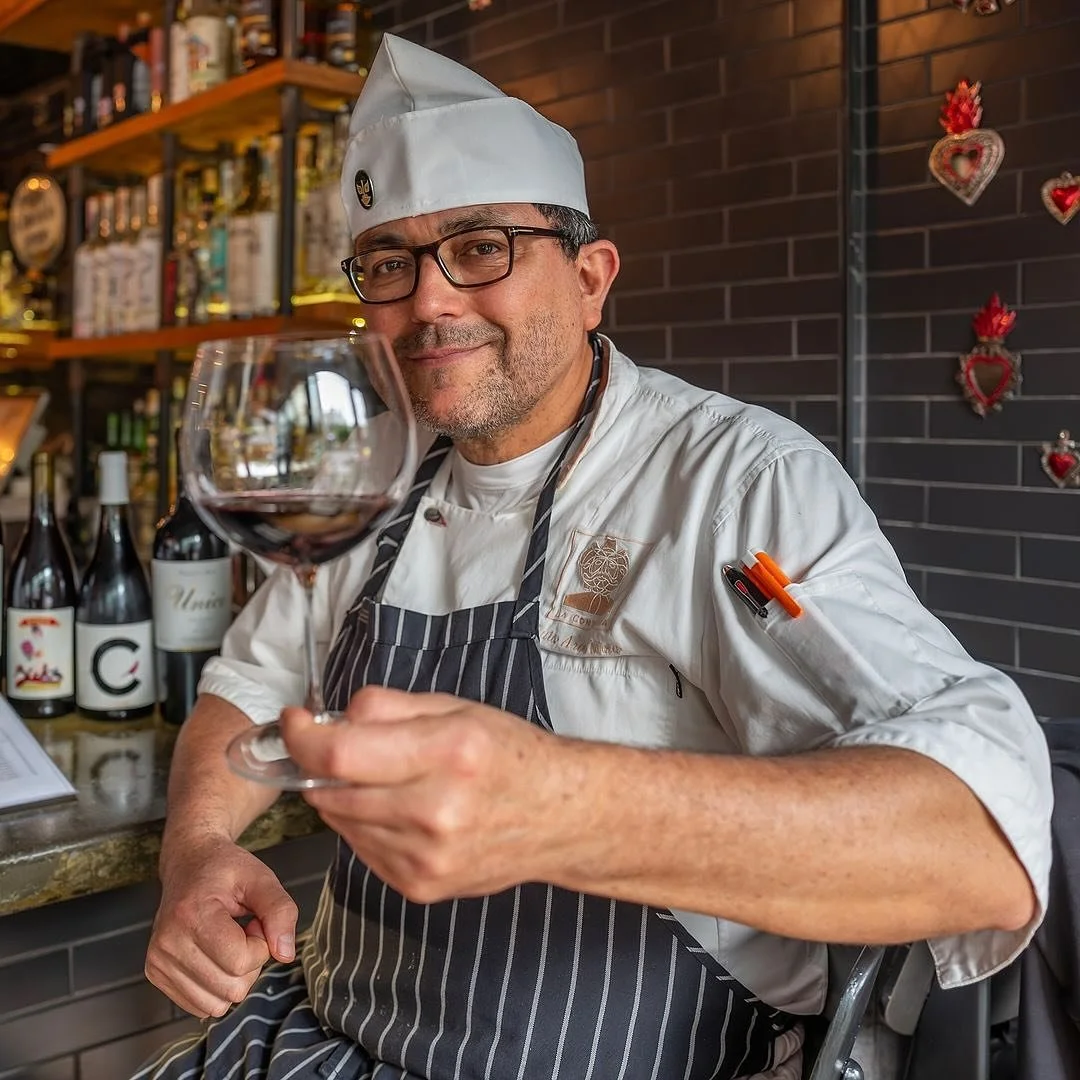
La Contenta Oeste has the first all-Mexican wine list in the United States. How do Mexican wines pair with traditional Mexican food, and what tends to surprise people most?
Mexican wines pair naturally with our food because they grow together, same soil, same sun, same spirit. The Valle de Guadalupe on the Pacific Coast gives wines a bright acidity and minerality that cut through richness. Think a nebbiolo-style red paired with birria, or a crisp sauvignon blanc with aguachile. They don’t fight the chiles, they dance with them.
What surprises people most is that Mexican wine isn’t just good for Mexican wine, it’s world-class, full stop. Guests expect to settle, to make a compromise. Instead they discover something thrilling, complex, elegant. And suddenly they realize: why wouldn’t Mexico make incredible wines? We’ve been doing this since the 16th century.
More Than a Cooking Class
La Contenta Oeste has become a destination for authentic Mexican cuisine in the West Village. What was the vision behind opening the restaurant, and how does the class reflect that same philosophy?
The vision was simple: create a place that felt like Mexico–not Mexico as theme or stereotype, but Mexico as I lived it–warm, unpretentious, full of flavor and genuine hospitality- a spot where you could taste the complexity of our cuisine while feeling like you’d wandered into a friend’s home In the West Village.
The class reflects that same philosophy exactly. Whether you’re at the bar or at the worktable, the goal is the same: to share Mexico, to break bread, to learn with your hands, to understand that our food comes from real places and real people. Restaurant or classroom, it’s all just an invitation to sit with us.
People often come in expecting a typical cooking class. What do they usually realize halfway through that they didn’t expect?
Students expect a recipe. They leave with a connection. Halfway through, something shifts, they realize this isn’t about following instructions. It’s about feeling the masa, understanding why we grind by hand, hearing the stories behind each dish. They’re asking questions about things they never thought about: corn, tradition, dried peppers. The surprise? They came to learn cooking. They realize they’re leaving with a piece of Mexico. And that changes how they’ll cook forever.
For groups deciding between a dinner, a tasting, or a class, why does a hands-on experience like this tend to leave a stronger impression?
Dinner feeds you. The class changes you.
At a dinner or tasting, you’re a guest, you receive. It’s a beautiful but passive experience. In the class, you become part of the story. With your hands in the masa, your senses discovering, your questions answered in real time, you don’t just taste Mexico, you make it. You feel it. You earn it.
That memory lives in your muscles, not just your mouth. Months later, you won’t remember every dish you ate. But you’ll remember the first time your hands shaped a perfect tortilla, and the grandmother whose technique guided you there. That stays. That’s the difference.
Taking a Piece of Mexico Home
Each guest leaves with a gift bag of chiles and fresh masa. What’s the idea behind that?
The gift bag is an invitation, not a souvenir. I don’t want this experience to end at the door. Those chiles, that fresh masa, they’re a bridge between my kitchen and theirs. Take them home. Get your hands full of masa again. Make the tortillas for your family. Invite your friends over and share what you learned.
My hope? They don’t just cook. They continue the tradition. They become the ones passing it forward. That’s how Mexico travels, one kitchen, one meal, one story at a time.
An Invitation to the Table
For someone considering booking this for their team, a group of friends, or a special occasion, what do you want them to know before they walk through the door?
Leave your expectations at the door. You don’t need experience. You don’t need to know anything about Mexico. Just bring an open mind, clean hands, and a willingness to connect.
What happens here is more than a cooking class. It’s a conversation across generations. You’ll laugh, you’ll learn, you’ll get messy. And when you leave, with masa under your nails and a story in your heart, you’ll understand why we do this.
This isn’t entertainment. It’s an invitation to our table. To Mexico. To something that will stay with you long after the last bite.
¡Bienvenidos! Let’s cook.
Ready to get your hands in the masa? Book Chef Luis Arce Mota’s Mexican Culinary Techniques class, a private, hands-on experience for groups of 6–10 at La Contenta Oeste in the West Village. Available exclusively on Leisurely.